My experience of doing data collection

My experience of doing data collection

By Khatira Ahmadzai

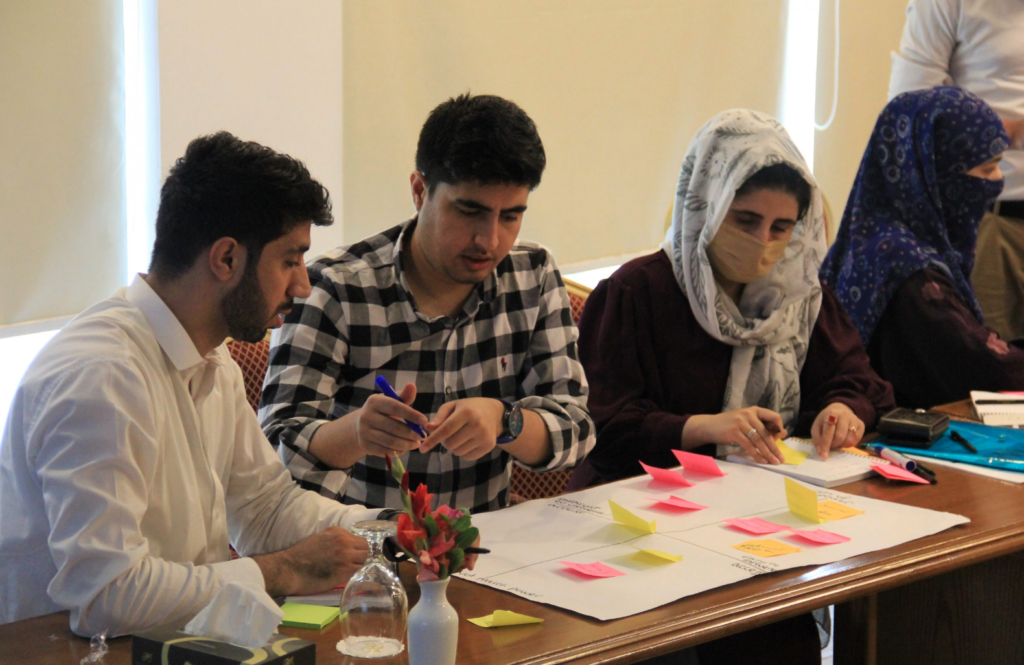
As part of the Voices of Refugee Youth research study, I have undertaken data collection on three occasions. This has involved a survey with refugees at secondary school in Pakistan. Doing data collection was a great experience because I love to connect with people and have the opportunity to listen to their issues and try to solve them. We (the youth researchers) experienced many issues when we ourselves were secondary school students, and there was no one to ask us about our challenges of being Afghan refugee students in Pakistan. I have enjoyed taking on this role for the current students whom I have met during data collection.

One challenge we faced was accessing students while they were at school. On multiple occasions, we faced issues such as some schools not giving us permission to interview students. Some schools’ principals made the excuse that students were not interested to speak with us, preventing us from asking the students themselves.

A second challenge was contacting students. We found that many of the contact numbers of students were incorrect, due to them changing their mobile numbers since the previous data point. Similarly, we struggled with unfamiliar school names/locations; for two or three days we were looking for certain schools, and finally we found out that there do not exist any schools with this specific name.

However, I really enjoyed data collection because we found out more interesting information about students’ issues and shared that with the rest of the research team. I particularly enjoyed working in a team. I was collecting data in a team of three members (me, Zainab, and Rozina). This was beneficial, because whenever any problem came to us, such as dealing appropriately with principals and students, we solved that as a team. Therefore we felt secure and also we enjoyed visiting different schools.

Data collection also helped us to realise some issues of Afghan refugees students which we didn’t know before. This included that they struggle with not having proper classrooms or professionally trained teachers.

In summary, there were some good experiences and some challenging experiences of data collection, as I have mentioned above. I enjoyed the experience overall, and look forward to sharing more about the experience of Afghan refugees in the future.

The impact of pandemic-related restrictions on education in an urban refugee community from Huye district

The impact of pandemic-related restrictions on education in an urban refugee community from Huye district

By Fabrice Nininahazwe

The Covid-19 pandemic, which has been causing disruption across the whole world, for more than two years, has had devastating effects on the lives of urban refugees from Huye district in Rwanda. It was in March 2020 that, in order to stop the spread of this pandemic, restrictive measures were taken by the Rwandan government. In the field of education, the impact of these pandemic-related restrictions, whilst bringing some opportunities for innovative forms of learning, has mainly caused challenges for refugees.

At the start of the pandemic with the establishment of a total lockdown, all public and private services were closed, and the students, from primary schools to universities, had to return home. Furthermore, at home, many refugee parents lost their jobs and so it was difficulty to feed their children at home. As a result, it was more difficult to support the education of children who spent several months at home doing nothing, and consequently some ended up in a form of delinquency.

For the university students from our community, this pandemic had consequences on their financial capacities because it made the duration of academic years much longer. For students in their final year, the challenge was enormous because they were due to finish their studies at the end of 2020, but they instead had to finish the following year with a loss of one year of teaching. So they not only lost a year of teaching, but they also lost money with additional expenses that were not planned because they were supposed to finish their studies in 2020. Thus, at the start of the lockdown, they stayed at the university to do their research, and at the reopening of the schools, they had nothing left in their budget.

Another challenge which was caused by pandemic-related restrictions was the difficultly of meeting university supervisors because many lecturers were working from home. It is for this reason that many students did not resume their studies as before, because lecturers no longer came to the classrooms daily. Instead, they used online systems such as Microsoft Teams, which requires a high speed internet connection. This caused an additional expense for the students. Due to the poor internet connection of the universities, students were obliged to buy their own internet connection in order not to fail to submit their assignments on time.

Besides that, there were further disturbances in studying conditions. For instance, in the middle of 2021, with the spread of the Delta variant, the Huye campus of UR which houses a lot of refugee students, had to close for a few weeks because there was an area near the campus that was put on lockdown due to an infection increase. After this, the students living in universities hostels were not allowed to leave the accommodation from 6:00 p.m each evening. This had negative effects on the budget of students who were forced to eat in the expensive restaurants inside their campuses, whereas they were previously subscribed to restaurants that are outside the campus at affordable prices.

All of this made university life even more complicated. It affected particularly the budget of refugee students who had to struggle to find financial means to supplement their university scholarships. Students needed to cover the costs of these additional months, but it was particularly difficult to find temporary work during the lockdown, since normal holiday work as a bar waiter or shopkeeper was not available. Additionally, the parents who were the other source of material support for refugee students, were no longer able to support them because the vast majority of them run small businesses in the markets or shops, which were closed from the start of the pandemic. Even after the reopening of activities, only 50% of businesses were allowed to open by alternating. This has severely worsened the economic situation of urban refugees.

Even though this pandemic has largely had a negative impact on education, it is worth noting that there are a couple of positive outcomes to mention. Firstly, refugee students have learned how to use electronic learning platforms. This was so beneficial for the students because not only was it a useful occupation during the period of school and university closures, but also it allowed them to follow online courses via the Coursera program, helping students to obtain certificates for validated courses. Thus, the electronic learning platforms were also beneficial to refugee students because it was a modern way of studying where they can find support from online discussion forums and it enabled them to study and practice whenever they wanted with an unlimited number of study materials. For these online studies, they were supported in particular by the Community Centre of Huye which played an important role in the education of refugee students during this pandemic. It made available for refugee students an internet connection and two computers for those who do not have one. Some of the students also took this period of lockdown as an opportunity of searching scholarships from developed countries.

Moreover, for refugee students who were in their last year of university, the pandemic has given them a little more time to carry out their individual research. They also learnt how to use modern technologies and today they are able to prepare a link and share it with other classmates, when organising an online meeting.

In conclusion, although the pandemic has now seriously decreased and most activities have returned to as they were before, it is still really important to recognise the way the pandemic has caused many challenges for refugee education in Huye and the way students continue to find new ways of learning.

My perspective on education and employment opportunities for refugees

My perspective on education and employment opportunities for refugees

By Christophe Irakoze

One aim of education, as stated in Rwanda’s Education Sector Policy, is “to combat ignorance and illiteracy and to provide human resources useful for the socio-economic development of Rwanda through the education system” (Mineduc Rwanda, 2003). This aim helps us to evaluate the outcomes of education for refugees in Rwanda, specifically in relation to their employment opportunities.

In my community, all children at the age of attending primary school (three years old and above) have access to learning, but the highest level of education for many young refugees is secondary school. After secondary school, the biggest challenge that these graduates face is the lack of financial resources to pay the university fees including a lack of scholarship opportunities that can allow them to continue their studies in Higher Education or undertake technical-vocational courses. Currently, a small number of refugees in my community get scholarships from Maison Shalom, DAFI-UNHCR, Kepler, and Davis College every year. Others participate in manual work to gain some money to cover their daily expenses because the certificate that they get after secondary school is not competitive in the job market.

In my experience, the lack of employment for these secondary school graduates is mostly caused by the lack of technical skills. This is because most of the secondary graduates participate in General Education instead of Technical Vocational Education, also known as TVET. To quote Kendric Charles Babcock (1920) in the book “Education, Technical”, he stated that “Vocational education is education that prepares people for a specific trade. It directly develops expertise in techniques related to technology, skill, and scientific technique to span all aspects of the trade, whereas General education refers to academic introduction to the university. It exposes students to the fundamental ideas and intellectual activities that scholars in the arts, the humanities, the social sciences, and the natural sciences draw on in their work”.

Currently, in Rwanda, most job opportunities require technical skills which make young refugees unable to compete with Rwandans on the job market. The lack of these skills or financial support prevents them from starting their own businesses such as welding, sewing, electronic repair workshops, participating in construction, or starting their small shops.

One of the secondary school graduates from Mahama camp whom I interviewed as part of the Voices of Refugee Youth study told me that he want to continue his studies at university because after university he can get a good job. He insisted that in his community, his elders who stopped their studies at secondary school level are jobless. He further stated that even if he wishes to study at university, he does not expect to get support or sponsorship from any organisation.

This problem is shared by many students. They are advocating for organisations like UNHCR to build TVET schools near the camps so that young refugees can have the ability to choose this opportunity. This is viewed by refugees as the most suitable option that could help them to get employed, get access to Science and Technology training or start their own businesses after graduating from secondary school.

The practical experience of being a Youth Researcher

The practical experience of being a Youth Researcher

By Emmanuel Ndayikengurukiye

In this blog, I am describing my journey of being a Youth Researcher as a fantastic way for learning and achieving an improvement in research skills. The process began when I saw the application call for the Voices of Refugee Youth study; it was an exciting opportunity to measure my knowledge in data collection and analysis. Fortunately, having been selected in the cohort of Youth Researchers in Rwanda, I have gone further than acting as a good data collector by learning about data analysis, interpretation, visualisation and the process of writing up findings. This research project has increased my knowledge and given me a positive impact amongst my community and the way I can advise other Youth Researchers.

One impact of being a Youth Researcher has been learning how to plan and organise data collection activities. The first step was to understand the survey, research methodology, ethics and the difference between open and closed questions. To have informed consent for conducting surveys is also very important in order to create a safe environment for participants and the Youth Researchers. Beside this task of being an enumerator, another responsibility of the role of the Youth Researcher is to produce reports regarding my reflections on each data point and being involved in writing up blogs. These skills were supported by the training course; however, attending the training sessions online (due to the spread of Covid-19) needed some basics in ICT skills. Therefore, it was somehow challenging for me due to the lack of strong and stable internet and having enough knowledge in using Google Drive. Nonetheless, I did my best to improve my level in ICT skills. Following the most recent training weeks (Unit 3), I have finally understood how to undertake good data analysis, presentation and reports.

Another impact of the role is being known as an ambassador for the refugee community. At the secondary school in which I collected data, I was respected by research participants and other education stakeholders because some of them considered Voices of Youth Refugee as an advocacy programme for refugees. A researcher is considered as someone who has relationship with donors and is able to do advocacy in order to increase the number of fully funded scholarships for young refugees who are in secondary education. Therefore, during the data collection, I was able to give a good introduction of the possible impact of the research project to research participants, education stakeholders and the refugee community. It was my duty to explain clearly the purpose of the research project at all levels (from the participants to community leaders).

Being a Youth Researcher is therefore a responsibility. My advice to a future cohort of Youth Researchers is that they will have to be neutral in the research process and never make promises through their conversation with respondents. It is important to be data driven and objective instead of being emotional in data collection and analysis; otherwise, you will have biased data and risk misleading the participants.

In summary, being a Youth Researcher has so far been an opportunity for me to understand different key steps in a research project from the beginning to the writing up findings. It is my pleasure to have such an opportunity and to participate to a study for which the main purpose is to explore the impact of post primary education for refugees. I hope that the skills gained in this research project will help me in my future career in the education sector.

My story so far

My story so far

By Noor Ullah

I have been part of the Voices of Refugee Youth research study for the last 2.5 years. This blog outlines my story as a youth researcher so far.

The story goes back to the time when I had no idea about the research study. I first got to know about it through a close friend: he told me that there was a work opportunity with a research organisation based in the UK. I decided to apply to it for experience and monetary benefits, and later got to know that the role offered much more than this. So I applied and got short-listed, had an interview and passed the interview as well.

At the beginning, the instructors came and we (the group of youth researchers in Pakistan) started our initial two weeks training regarding the study, the objectives, our roles and the final outputs.

During this time, we learnt more about the study’s importance. We discussed that education research can empower research stakeholders through the data it produces: with the findings, it can better clarify our purposes to teach, lead and spend effectively, improve processes and priorities when introducing change, and also make informed decisions, which ultimately leads to making a very positive impact in education. Moreover, through better education we can support young people in society, and these persons have the potential to make decisions that will ultimately impact communities – both locally and globally – in a very positive way.

During the training, the instructors were very helpful and open to ideas. They were interested to hear from us what we refugees have in mind, welcoming new ideas and suggestions. After the training sessions for Unit 1 and learning the foundational research skills, we were askedoput these skills to practice. We visited different schools and universities, conducted a survey and interviewed participating students, listening to their stories and challenges they face. Subsequently, we have had two other training units and data collection points, DP2 (Data Point 2) and DP3. These all built on previous skills that we learned.

We spoke to a lot of students in different secondary schools and universities during data collection. Through this study, we got to know more about my fellow Afghans students’ experiences, heard their voices, and learnt about the challenges they face. These difficulties include barriers within the admission process, poor quality education, or a lack of learning resources and tools.

However, simply hearing these voices is not enough: conveying and building solid evidence and presenting this evidence to decision makers is important. That is what we – the youth researchers and Jigsaw/REUK in partnership with UNHCR – are doing, to make sure the voices of the voiceless are heard.

It was always my dream to make a positive impact and contribution to the Afghan refugee society where I belong, but I never had the required knowledge to know where to start from. The Voices of Refugee Youth study has really paved the way for me: what better way than education, through research and a proper understanding of Afghan students’ needs, can help in making that childhood dream of creating a positive impact and change for our war affected community a reality. I am therefore very excited to be part of this research study.

Personal highlights from DP2 data collection

Personal highlights from DP2 data collection

By Gentille Gasanabandi

Worldwide, the number of refugees has been increasing due to new crises and the lasting impact of old ones.(1) One crucial way to support refugees to achieve self-reliance and tackle the challenges they face in host countries is through the provision of quality education. The Voices of Refugees Youth study aims to research refugee education in order to generate evidence for informed decision making. In the following paragraphs, I narrate my experience as a youth researcher during the second phase of data collection for the Voices of Refugee Youth study, including the challenges met and my approaches to mitigate them.

Data Point 2 was the second round of data collection for the Voices of Refugee Youth study. It was conducted primarily in Mahama and Gihembe Refugee camps in October, 2021. It involved a survey with several hundred young refugees, evaluating the impact of post-primary education in emergencies. This data point also explored the effect of Covid-19 on these young refugees, in addition to their experience of education.

The first challenge I met while collecting data was the fact that refugees were moving from one camp to another. This happened because their former camp was in a zone prone to natural disasters and was overcrowded, while there was another less populated camp. Due to this situation it was not easy to find certain participants because the easiest identifier in a refugee camp is a home address. The home address became even more important as, after graduating from secondary school, many participants had changed their phone numbers. To mitigate this obstacle, I contacted the UNHCR staff member who was in charge of the relocation process to know which people were due to move last. I therefore started by surveying the latter participants and, when all were moved to the new location, I went there to complete the exercise with the remaining participants.

Secondly, Data Point 2 was made difficult by the fact that our participants who were first contacted in their final year of high school had moved out of the camp to seek jobs. This, compounded with other factors, made it difficult to reach out to some participants. Often, in order to get in touch with them, their schoolmates were contacted; sometimes this would not help and alternatively their parents had to be sought for and asked for the phone numbers of their children.

The last challenge worth mentioning is the impact of some of the students having to change schools. Mostly, this was for reasons that were far beyond the students’ level of education attainment. This is best exemplified by the story of Keza.

Keza is a 20 year old refugee who moved from her camp and came to a school close to Gihembe. When we were interviewing refugee students from Gihembe, we included Keza because she was also a refugee, although from a different camp. Her school expenses had previously been paid by one of her relatives who passed away near the beginning of her last year of high school. She could not afford the private school any more. She was then obliged to move to a public school where there was not the same course which she was taking at her former school. She therefore had to change her major in the final year. Before the year got in the half, her former classmates learnt about her situation and put together their allowances to pay her school fees. This ended up bringing her back to her old school and resuming her course of choice.

Like Keza, there were other participants who had moved between schools and therefore it took me time to get in contact with them. It was, however, worth the effort because these students often were the ones with particularly interesting stories.

To sum up, the second phase of data collection for the Voices of Refugee Youth study was an exciting experience. It had unexpected challenges and responding to them added value and content to the study.

(1) UNHCR (2021). https://www.unhcr.org/refugee-statistics/

Reflections on co-authorship in academic research

Reflections on co-authorship in academic research

By Rebecca Daltry

Participation is at the heart of the Voices of Refugee Youth study. From the outset, we have sought to find ways in which the youth researchers in Pakistan and Rwanda and Jigsaw/REUK staff in the UK can all make valuable contributions to every stage of the research process. Recently, this has involved the co-authorship of a journal article (currently under review) reflecting on the experience of delivering a participatory, youth-centred research study. This blog outlines the learnings which emerged from the process of writing the article, in the hope they can inform other efforts to increase diversity and representation in academic literature.

How did we approach co-authorship?

Producing a co-authored journal article has been outlined as a key output of the study since its inception. We began by determining the authorship team. Since it would not be feasible to include all 31 youth researchers in the team, they were invited to submit an application. Four youth researchers (two from Pakistan and Rwanda respectively, split evenly by gender) were selected, based on the quality of their application, experience of producing written reports and level of written English. They were joined by a sub-group of the Jigsaw/REUK researchers who work on the Voices of Refugee Youth study. 

To begin the process of writing the article, the youth researchers were sent a series of questions/guiding prompts related to the article’s topic, in response to which they each produced several paragraphs of writing. This stage was collaborative – the Jigsaw/REUK team worked closely with the youth researchers by providing feedback and suggestions, and their writing went through several stages of revision. 

The final written output from each youth researcher was then used as the foundation for the first draft of the article. The Jigsaw/REUK team undertook a process of linking together the different points and structuring the article accordingly. Having threaded together the argument, based on the youth researchers’ contributions, the Jigsaw/REUK team then added the framing material for the article and wrote any additional text required to complete the draft. As with all academic articles, this then went through several stages of editing – including a review completed by the youth researchers – before a final draft was submitted to the selected journal. 

What did we learn from this approach?

While this approach enabled collaboration and written input from all authors, it was not without challenges. This arose primarily from the asynchronous nature of the different written contributions. While youth researchers contributed the main perspective of the article (through the production of written paragraphs on key topics), the Jigsaw/REUK team were tasked with threading together the different contributions and structuring the overall argument. This led to conversations over how best to frame the pre-written content. Quoting it verbatim seemed the most authentic way to represent each youth researcher’s voice and perspective. However, treating the youth researcher’s writing as quasi-interview data seemed to diminish their role as co-authors. Moreover, a certain amount of editing and combining of voices was required to produce a cohesive overarching argument. 

These questions about editing together different written contributions were linked to discussions about the article’s tone of voice. Understandably, all authors have different styles of writing, and co-authorship is always a collaborative process in order to achieve a blended voice. This is exacerbated when the co-authors have varying levels of proficiency in the chosen language (in this case, English). Creating a cohesive tone of voice for the article therefore required a certain level of editing and threading together of different voices. However, there was wariness of editing the various contributions to the article to the extent that certain voices (particularly those more confident in writing in English) were at risk of dominating others.

These debates about collaboration and voice ultimately centred around the question of what constitutes authorship. At the beginning of the process, written authorship was primary. The youth researchers wrote paragraphs on the key topics of the article, which were treated as foundational to the argument. However, by the end of the editing process and the many discussions about the cohesion of all authors’ voices, we began to understand authorship as a broader process. In particular, spoken contribution and collaborative discussion was viewed as much a part of authorship as written contribution. These forms of contribution were seen to enable the representation of all perspectives, even when the article itself presented one cohesive voice. To underpin this representation, we also chose to include a selection of quotations from all authors within the article: this was viewed as a way to highlight individual voices and show their contribution to the collective whole. As a result, a careful balance of individuality and cohesion was struck in our approach.

What would we recommend for future approaches to co-authorship?

Overall, the process of co-authorship was a highly positive experience. It not only sought to enrich a historically inaccessible academic space, but also facilitated greater dialogue and discussion around what constitutes representation. This will serve as a strong basis on which to approach the dissemination of findings for the Voices of Refugee Youth study, as it enters its final year. 

Specifically, the process of facilitating and debating co-authorship provided two key learnings for future approaches, which we hope can be of benefit to others publishing in the academic space. Firstly, we would recommend the recognition that authorship need not be limited to written contribution. Processes which enable discussion and spoken contribution can help to facilitate co-authorship amongst a team in which there are differing levels of proficiency in the language of communication. 

Secondly, and relatedly, co-authorship can be strengthened by a structured and regular process of discussion and feedback. In the process of creating and refining the article, we found that the greatest progress was made when all authors were involved in responding to queries and contributing to the draft in a structured manner. This helped to facilitate a process through which each author could feed in their perspective and draw upon their specific skill set. Placing a high level of emphasis on discussion should therefore be foundational to enable equal contribution across the team. 

Co-authorship has been a crucial means through which to explore participation in all stages of the research process. The lessons we have learned and recommendations we have proposed are not exhaustive, and we recognise that our approach has been in itself exploratory. We therefore welcome feedback from others seeking to engage in discussions around the implementation of participatory approaches to carrying out and communicating research.

The importance of research ethics in refugee education research

The importance of research ethics in refugee education research

By Aime Parfait Emerusenge and Aimee Furaha Tuyirate

Research ethics have been a key consideration since the beginning of the Voices of Refugee Youth study. As Youth Researchers, our first training sessions devoted hours of discussions on the topic of research ethics, considering the reasons why we should apply them during the research study. This blog explores the ways in which research ethics play an important role in refugee education research and the way they have been applied by the Youth Researchers during data collection for the Voices of Refugee Youth study.

Research ethics can keep at minimum the risk of harm to participants. There are many potential risks to consider. These include physical harm that participants may undergo as a result of participating in the research such as injury or physical abuse to name but a few, the psychological distress and discomfort which may be caused by the nature of the questions used during the research, the social disadvantage for the participants due to their participation in the research, the harm to financial status due to the financial losses or costs that participants may have for participating in the research, and the invasion of privacy and anonymity when their identity is known by the third parties due to the research. Ensuring ethical compliance can prevent such issues in refugee education research, hence its importance.

Although we did not encounter all the risks stated above, there were some cases which demanded careful consideration. This often happened while interviewing refugee participants and asking potentially sensitive questions about challenges they have faced. One youth researcher shared her experience of this: she interviewed a female participant who became emotional after remembering the way she faced difficulties in completing her secondary education, due to the lack of food, clothes, and other basic school materials. Fortunately, Jigsaw and REUK have trained Youth Researchers in the ways we can both cope with such situations. For example, showing empathy is the main way to solve such issues. Our Youth Researcher paused the interview and spoke with the participant, recognising that the question was sensitive and reminding her that it was not mandatory to answer it. After a short conversation, the participant proposed that the interview should continue. Minimising the risk of harm to participants in this way has therefore remained a priority whenever it was required during this research study.

Research ethics also require the obtention of informed consent from research participants. This is a foundational principle of research ethics. It ensures that every participant understands that they are taking part in the research, and the implications of this participation. A researcher must explain to the participants the purpose of the research, what the research will involve, how the data will be used, and the way the research will likely have an impact. As Youth Researchers, we recognised the importance of this mandatory step. However, the challenge that we both faced during data collection was when some refugee participants only had a short time to participate in the survey or interviews, whether face-to-face or via phone calls. Due to these constraints, they sometimes wanted us to skip the informed consent stage. However, in the interest of upholding good practice in research ethics, we had to explain to them the importance of passing by this stage, so that they could understand everything about the research in which they were participating.

Finally, research ethics require that the anonymity and confidentiality of research participants is upheld. In the case of the Voices of Refugee Youth study, this has meant that Youth Researchers have had to ensure that the identity and contributions of the participants are kept confidential. The one way we have achieved this was to ensure that we meet participants in places that allowed them to speak freely. For instance, during previous rounds of data collection, we had to make sure that the refugee participants (who are students in secondary and higher education) were in a place where the school authorities could not influence their responses. However, it was not easy to ensure anonymity and confidentiality in some situations, due to COVID-19 measures. During this period, Youth Researchers were obliged to collect data remotely. It was therefore hard to know that the research participant was not with another friend that may influence his or her responses. For every situation, however, we did everything we could to ensure confidentiality and anonymity.

In short, during the Voice of Refugee Youth study, research ethics have been considered, and they have proved to be important. There have been situations in which it was hard to apply them, especially during the remote data collection. Nonetheless, as Youth Researchers, we have tried our best to handle these critical situations and uphold the safety of the research participants at all times.

The practical experience of being a youth researcher

The practical experience of being a youth researcher

By Khalid Khan

Since September 2018, I have been working as a youth researcher with Jigsaw and REUK on the Voices of Refugee Youth research study, in partnership with UNHCR. This study aims to investigate post-primary education for refugee youth. 

As youth researchers, we have a central role in the research study. We have received training in research methods, first conducted in-person at the UNHCR Compound in Peshawar, and then conducted online during the Covid-19 pandemic. Applying this training, we have then led data collection, conducting surveys and interviews with Afghan refugee students from different universities & schools within Pakistan (specifically in Peshawar, in the region of Khyber Pakhtunkhwa). Up to this point, we have completed three data collection points and received the same number of training units (with one left to complete this year).

For me, being a youth researcher has been a brand new experience, unlike any other, and I have gained so much over the past three years. The training sessions, provided before data collection, were a new experience for me, as it was my first ever experience in the role of a youth researcher. I am in no doubt that I have learnt a lot about research; for example, I have come to know about the difference between qualitative and quantitative research, and have learnt about research ethics in detail. Also, in the role of a youth researcher I come to know that one has to be flexible for new experiences and challenges. Collecting data has provided some challenges: we have had to deal with people of different cultures, languages and religions. Therefore, I have learnt that while collecting data you need to be understandable and to be clear about the purpose of the research to the participants.

The experience has also taught me several things about the unique role of a youth researcher. Youth researchers should be authentic and realistic as they play the role as a liaison between refugees in their community and stakeholders from the rest of the world. This is because youth researchers record the voices of other young refugees and represent them to the rest of the world – they are therefore a bridge between the refugees and the rest of the research community. Hence, I believe that if one is in the role of a youth researcher, he or she should keep in mind that we are chosen to speak on the behalf of young refugees; now it’s our responsibility to represent their voices in an actual and genuine way to help refugee youth have access to the world to deliver their voices and messages. Being in this role has therefore furnished my communication and writing skills, including how to communicate formally with different people and then transcribe the conversation.

Finally, I believe that a youth researcher has a vital role in the research process, because the overall credibility of the report is dependent on the sources and quality of reporting by the youth researcher during data collection. This has shown me, as a youth researcher, the importance of being realistic, clear and to the point. Research can be valuable not only for the researchers but for other stakeholders (including students, teachers and organisations). Therefore, in my experience as a youth researcher, I have learned the value of good quality of data and the way in which youth researchers can hold a unique role in the research process.

My story so far

My story so far

By Gabriel Karerangabo

My name is Gabriel Karerangabo, a youth researcher for the Voices of Refugee Youth research study in Rwanda. My experiences speak as an example of the way in which education can support refugees to learn, lead and impact communities in a positive way for change. In 2016, I entered higher education, before joining the Voices of Refugee Youth study in 2019 as a youth researcher. This role has increased my desire to advocate for youth, train them and increase their opportunities to grow. This blog is a personal account of my experience in education and employment, and the ways in which the Voice of Refugee Youth project has impacted on this.

In 2016, I enrolled in the University of Tourism, Technology and Business studies for a course in Business Information Technology. As a refugee, the learning conditions were challenging because, although my sponsor paid for my tuition and accommodation fees, I had to support myself for other school and life requirements. Through this experience, I learned to identify a problem and tackle it in order to solve it. I wasn’t the only refugee at this institution; there were other refugees from different locations across Rwanda. I took on a leadership role amongst my peers, and I have sought to advise them to find solutions by themselves and not wait for other people or organisations to bring change for them. My speech for them, as well as myself, was always: you are the change you wish to become.

Despite facing challenges during my educational journey, I believe that education is nonetheless the way forward towards prosperity. In 2019, I graduated from this university and became a secondary school teacher in Rwanda. It was an excellent opportunity where I thought I found stability in life. However, the salary I was getting was not sufficient. I received 150 USD monthly, and while waiting for the salary for the next month, my bank was empty. In Rwanda, houses to rent are costly.

In 2019, I saw the recruitment call to be a youth researcher for the Voices of Refugee Youth research study, launched by Jigsaw and REUK. I was inspired and impressed by Jigsaw and REUK’s mission and vision for education in emergencies, enabling us to be a voice for refugee youth in Rwanda and Pakistan. I took it upon myself to apply to become a youth researcher. Fortunately, I was selected and received the job. Now I am able to be a voice for refugee youth as I wished. So far, I have received training along with the other youth researchers, gained research skills, experienced working in a team, and finally, I have increased my passion for research in refugee education. I have really enjoyed trying to advance my research skills while thinking about tackling the educational problems which refugees face worldwide. I believe that, through research, the key issues can be identified and lasting solutions can be found. As a result, I applied to study for a Master of Science degree, in order to become an African Researcher. I was selected and enrolled in the master’s degree in 2020; I have now completed it in 2022, and I am an African researcher in education-based on technology.

Meanwhile, because I am passionate about refugee youth education, I have applied to be a student at African Leadership University to study Education in the Global Challenges faculty; growing in leadership will also help me to achieve my objective. I will complete my studies in 2022.

Being a youth researcher also opened my mind and equipped me with the skills I needed to start ‘Save the Youth Vision Association’ which works with youth in Mahama refugee camp. The initiative aims to help young refugees in developing their innate talents and potential, so that they can participate in providing more opportunities for refugees in the future. Working with my team, we have assisted students who are completing secondary school and want to go to university, by providing guidance for their application. Some have been awarded scholarships, ready to start their university studies. Now I have hope for the future, because working as a youth researcher for the Voices of Refugee Youth research study has helped me to gain many skills and the confidence to stand firm to find solutions for global challenges for refugees.

In conclusion, working as a youth researcher has had many advantages and provided me with many skills. It has opened my mind to thinking outside the box about my future and enabled me to find solutions to the challenges I was facing. I acquired all of these skills during my experience as a youth researcher, in addition to the knowledge I gained from my university degrees. I have therefore developed research skills to advance my mission towards improving education opportunities for refugees. I have grown to love the research field, and now I am not only a youth researcher, but I am an African Researcher.