What I learned about myself through research
“What have I learned about myself? I have learned how to empower myself.”
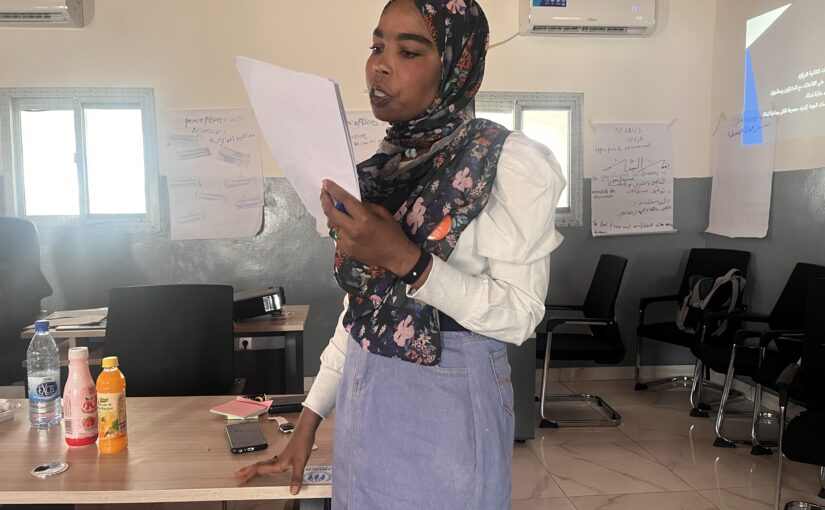
I am Maymoona Bathit Brago. I am from Sudan and I live in Touloum refugee settlement. I have been teaching since 2016, but I have been in Touloum settlement for two years.
The school environment is not too bad, but it is also not good enough. The students suffer a lot inside the class because it is overcrowded, and you can find more than one hundred and sixty students in one class. I thought my experience of collecting interviews and Focus Group Discussions (FGDs) was pretty awesome, and made me feel comfortable in my role as a teacher. As a refugee in the settlement, it made me proud to be a peer researcher helping my community.
My role as a woman changed a lot through my work as a teacher in the refugee settlement. It also changed the way I heard or understood what someone said during the data collection. For example, when I did the focus group discussion, some of them didn’t understand Arabic. I did my best to explain to them using their mother tongue language. I also learned how to empower myself.
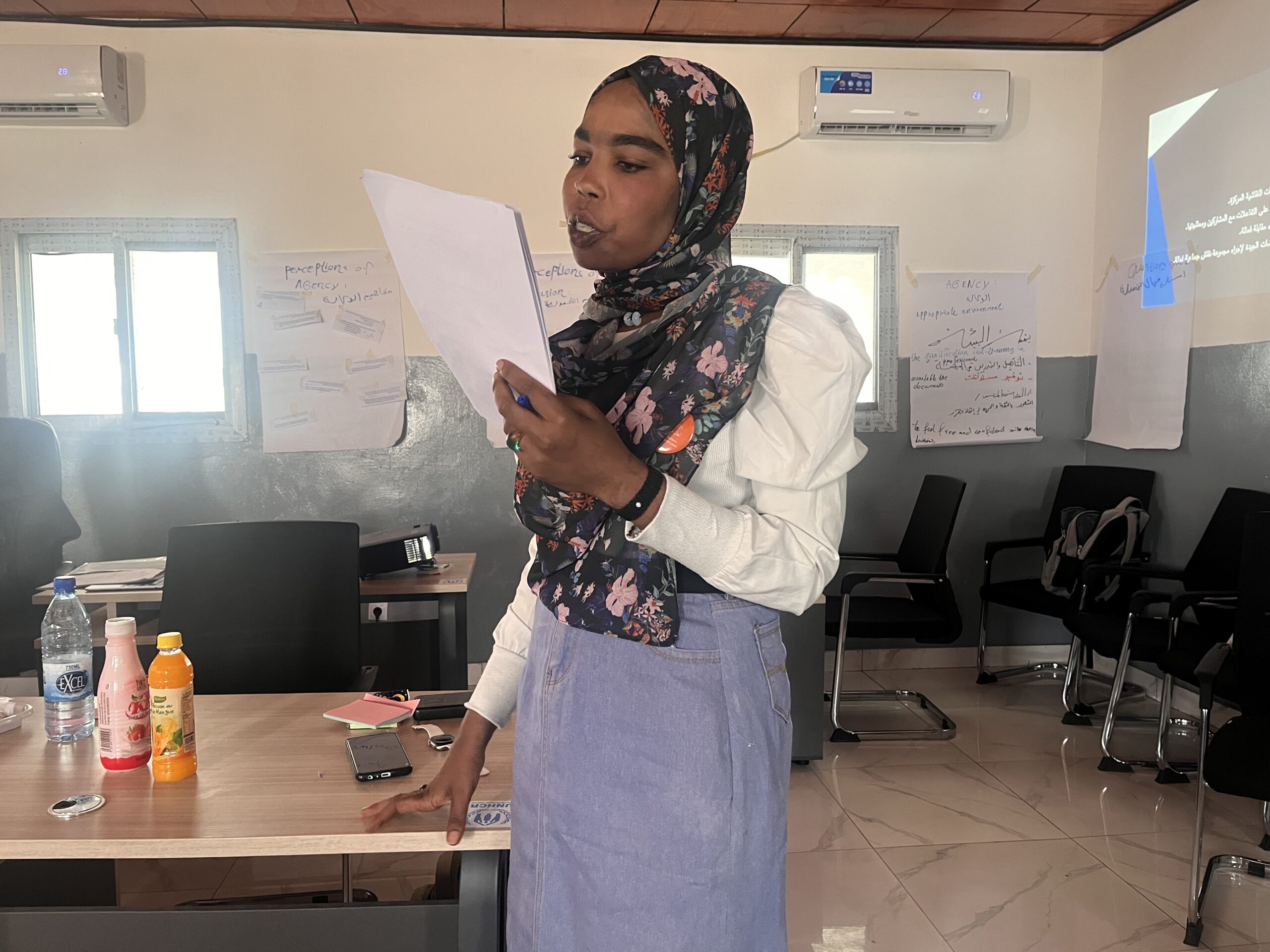
The interview and FGDs were different from what I expected. I was not able to speak to all the individuals as I planned because some of them are farmers and live far away from the settlement. Also, the teachers were on holiday and the network was pretty bad. The participants didn’t respond to all the questions in the way that I expected because they are far away from the information, and it was their first time hearing about it. They just do their duty, nothing much more.
In terms of how the conversation unfolded and how participants responded to me, it was positive because they have hope in order to make their dreams a reality. Yes, I noticed the difference in how national teachers, refugee teachers or inactive teachers engaged with me. All of them said it was their first time finding an organisation interested in solving their problems.
The time I enjoyed most in data collection was the individual data collection with teachers. Thinking about a specific moment, I had a conversation with a secondary school teacher. This teacher had no monthly salary at all and there were no other options for them. They had no security inside the school, whether from students or the community. It was a painful conversation because they were in conflict about whether to leave or stay at the school.
I also learnt a lot from working alongside the other peer researchers. They all have hope, and work hard in order to achieve their dreams.
What have I learned about myself? I have learned how to empower myself. I learnt that every action has a reaction in my community. There is always hope for their wellbeing.
And if I can share one message with someone reading this blog, it would be this piece of wisdom: when there is a negative there will be a positive. We must always use our words to change the situation, not to describe the situation.

This Think Piece is part of a series, featuring 18 refugee teachers from Chad, Uganda and Zambia. You can read the full publication here.
The contributors are peer researchers on a GERE study exploring refugee teacher inclusion, agency, and wellbeing. Read more about the study here.
Funding
This work is supported by the Global Partnership for Education Knowledge and Innovation Exchange, a joint endeavour with the International Development Research Centre, Canada. The views expressed herein do not necessarily represent those of IDRC or its Board of Governors.