Why refugee teachers should not be seen as a burden
“If I could share one message with the world, it is this: A refugee is not a burden. We are people with dreams, careers, and voices. Being in this situation does not make us any less human.”
Teaching has been my dream for as long as I can remember. Whenever the opportunity arose, I never hesitated because nothing brings me more joy than sharing knowledge. However, despite my passion and extensive volunteer work, finding a formal teaching job as a refugee has been a difficult journey. Even so, I have never thought about giving up on my dreams.
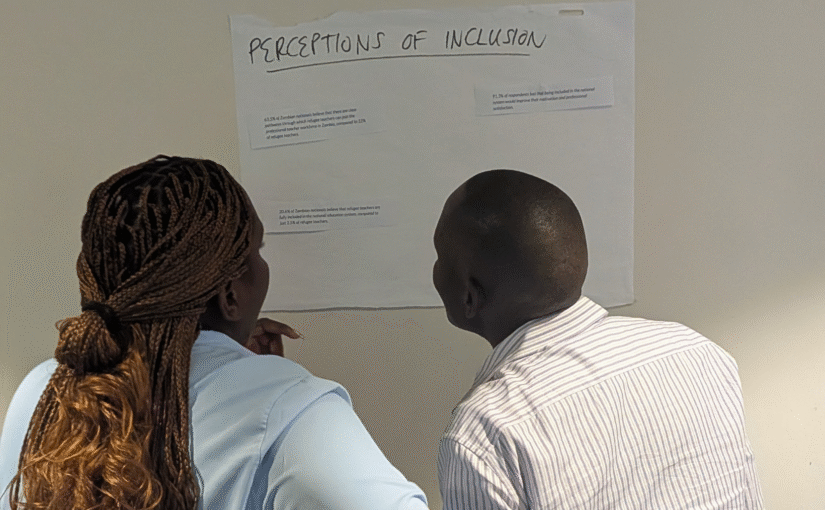
When I was invited to become a peer researcher, I felt a deep sense of relief. Finally, there was a study focused specifically on the challenges refugee teachers face. This journey has been incredibly fulfilling. It helped me realise how many of us share the same limitations, but it also showed me the different—and often surprising—perspectives national teachers have regarding our inclusion. It made me realise how much work is still needed to change people’s minds.
The highlight of the data collection process was meeting so many different people. They shared their struggles and opinions freely, hoping that their voices might finally lead to change. It is a heavy but beautiful feeling when people look to you as someone who might help improve their situation.
The hardest part was actually finding active refugee teachers. At first, the few I found were hesitant to participate. However, once they understood the nature of the research and its purpose, they became more than happy to open up.
The most profound part of this experience was the chance to redefine key terms based on our own lived experiences. We were able to blend formal definitions with our personal realities, which was a powerful process. Additionally, envisioning a life of a refugee with the participants in a perfect world was exhilarating.
If I could share one message with the world, it is this: A refugee is not a burden. We are people with dreams, careers, and voices. Being in this situation does not make us any less human.

This Think Piece is part of a series, featuring 18 refugee teachers from Chad, Uganda and Zambia. You can read the full publication here.
The contributors are peer researchers on a GERE study exploring refugee teacher inclusion, agency, and wellbeing. Read more about the study here.
Funding
This work is supported by the Global Partnership for Education Knowledge and Innovation Exchange, a joint endeavour with the International Development Research Centre, Canada. The views expressed herein do not necessarily represent those of IDRC or its Board of Governors.