The power of hearing refugee teachers’ voices
“Listening to a refugee teacher describe how recognition would restore dignity sparked excitement in me to highlight their truths. It made me feel that our experience can inspire change.”
My name is AKITERETSE CLODINA, a refugee teacher living in Nakivale settlement, Uganda. I teach at a primary school and have 8 years of experience. My school is a lively place where children love to learn and we’re passionate about making a difference despite challenges like limited resources.
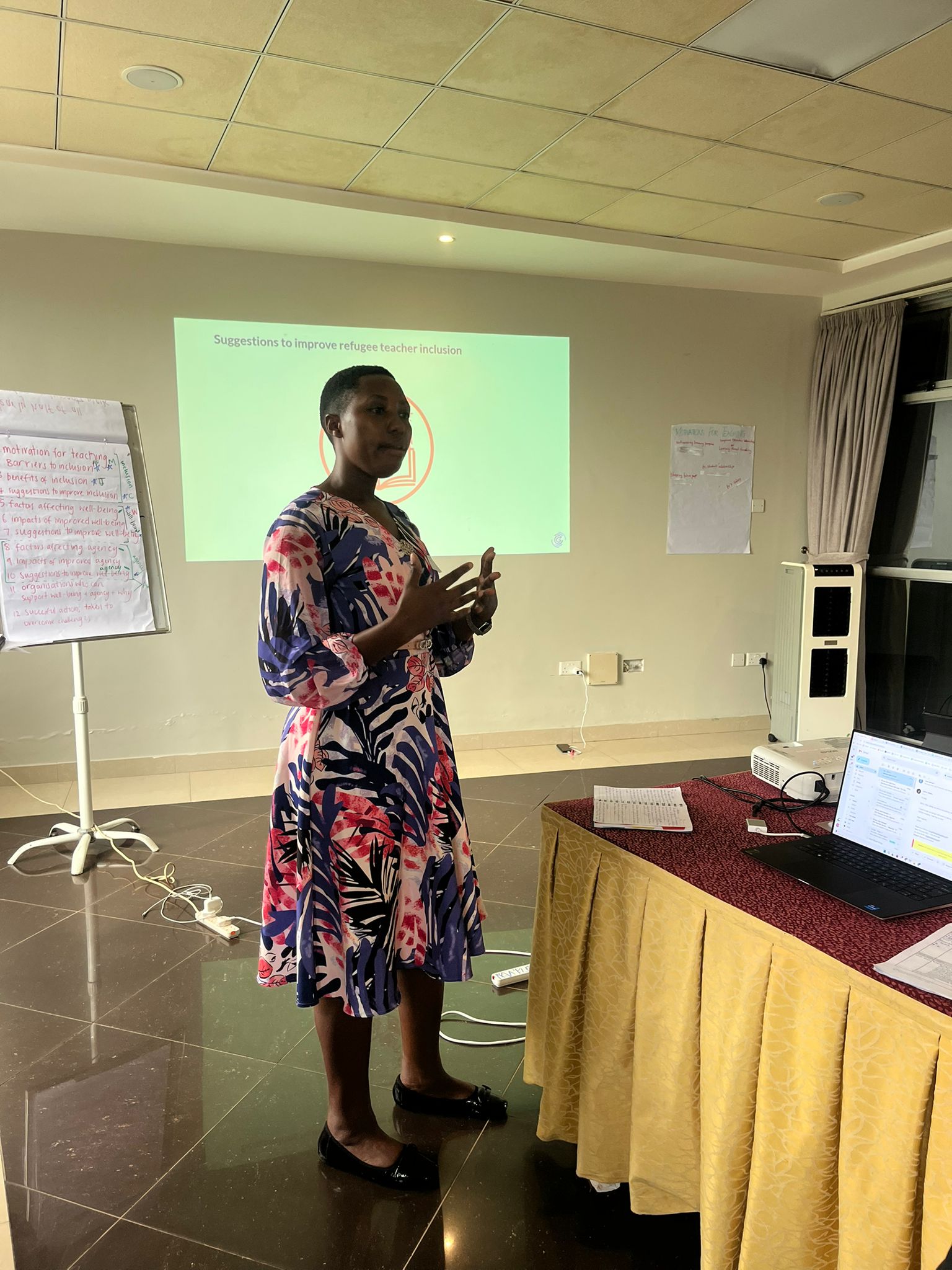
Collecting interview and focus group discussion data was an exciting journey. Wearing the hat of a researcher alongside my identity as a refugee teacher made me eager to hear and highlight our stories. One moment that stands out is when a fellow refugee teacher said “Being heard gives me hope”. This sentence made me realise how important it is to give voice to our experiences. The interviews were different from what I expected because they were inspiring and participants spoke openly about their struggles, which surprised me and showed me the power of honest conversations that flow naturally. I noticed that refugee teachers shared experiences that showed their resilience and strength. And refugee teachers shared more personal experiences than national teachers, showing their unique challenges.
The part I enjoyed most about data collection was hearing stories that energised me. Listening to a refugee teacher describe how recognition would restore dignity sparked excitement in me to highlight their truths. It made me feel that our experience can inspire change. For instance, one participant said being part of research made them feel valued for the first time in years. Moments like these reminded me of the importance of highlighting refugee voices.
This research taught me that listening with empathy unlocks valuable insights. Refugee teachers need recognition and support to thrive. Highlighting our stories can build a more inclusive education community. By giving voice to our experiences, we can challenge stereotypes and create opportunities for collaboration and growth.
Ultimately, it’s about creating spaces where refugee teachers are heard, valued and empowered to contribute to the education systems that work for everyone.

This Think Piece is part of a series, featuring 18 refugee teachers from Chad, Uganda and Zambia. You can read the full publication here.
The contributors are peer researchers on a GERE study exploring refugee teacher inclusion, agency, and wellbeing. Read more about the study here.
Funding
This work is supported by the Global Partnership for Education Knowledge and Innovation Exchange, a joint endeavour with the International Development Research Centre, Canada. The views expressed herein do not necessarily represent those of IDRC or its Board of Governors.