“As a peer researcher, I have been able to discover and better understand some of the realities in the teaching field in Nakivale Settlement, especially regarding refugee teachers’ inclusion, wellbeing, and agency.”
My name is Jean Bosco Nkengurutse. I am a Burundian refugee teacher and a Jigsaw peer researcher in Uganda. I fled Burundi and arrived in Uganda in July 2015. Fortunately, in August of the same year I got a teaching job as a teaching assistant and language instructor. This was mainly due to the large influx of refugees from French-speaking countries such as Burundi and the Democratic Republic of Congo.
Currently, I also work as a peer researcher in Uganda. This has been a very important opportunity for me because the experience I have gained is very valuable. As a peer researcher, I have been able to discover and better understand some of the realities in the teaching field in Nakivale Settlement, especially regarding refugee teachers’ inclusion, wellbeing, and agency.
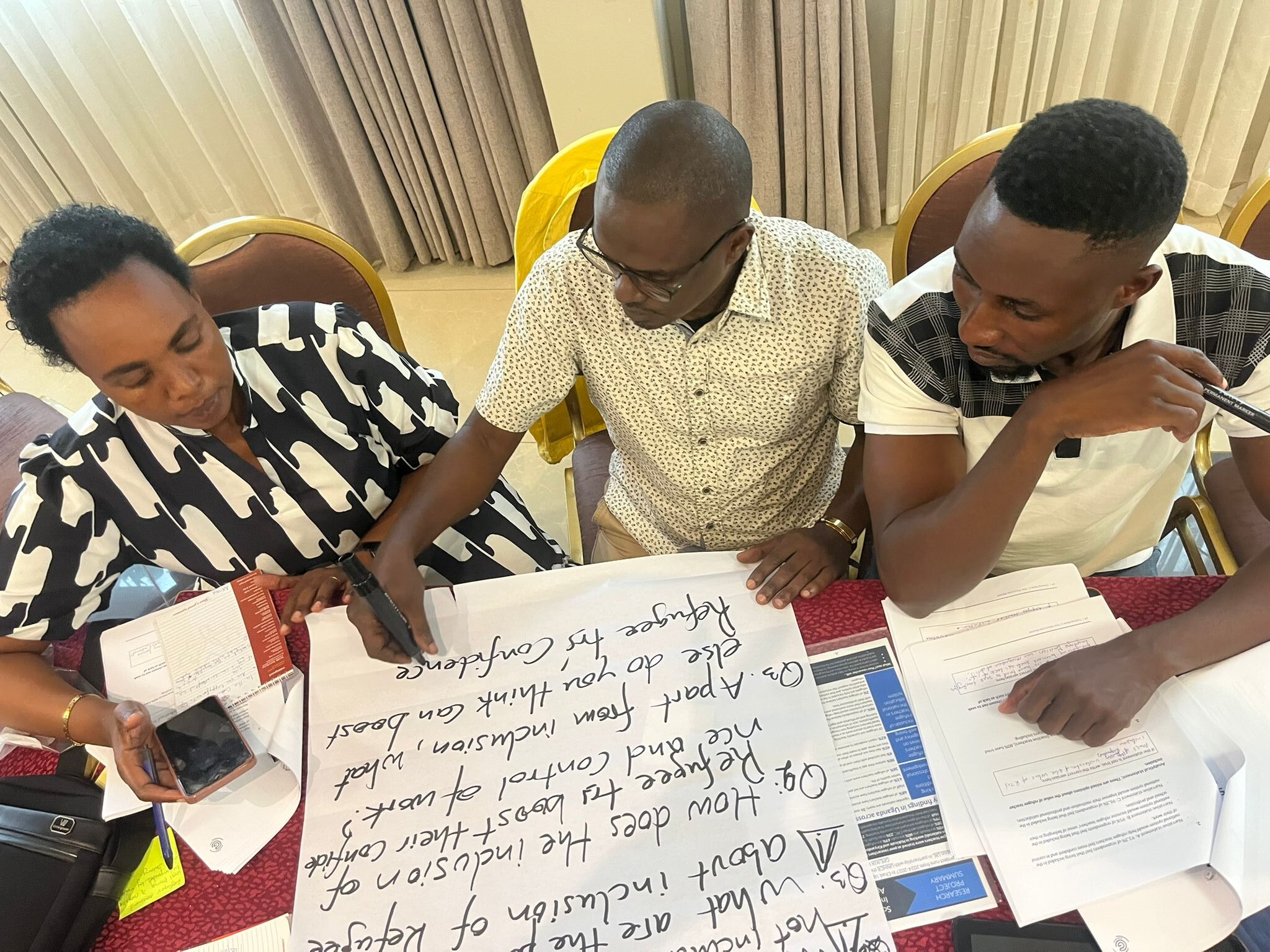
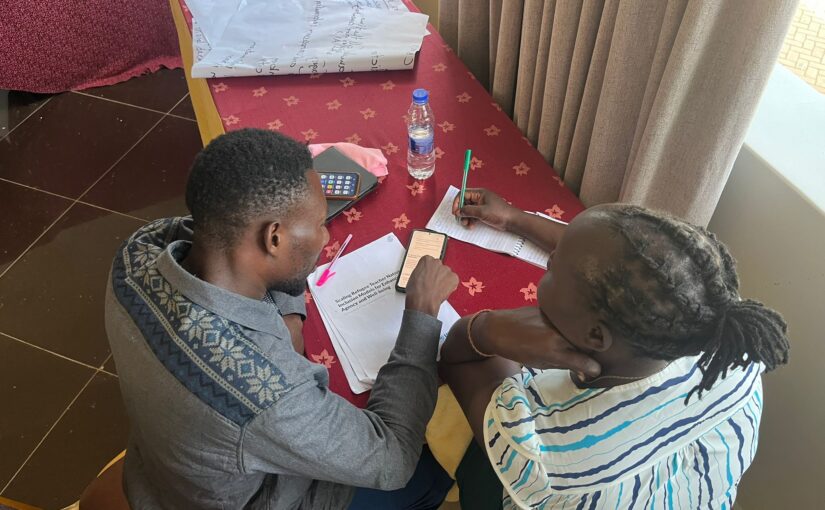
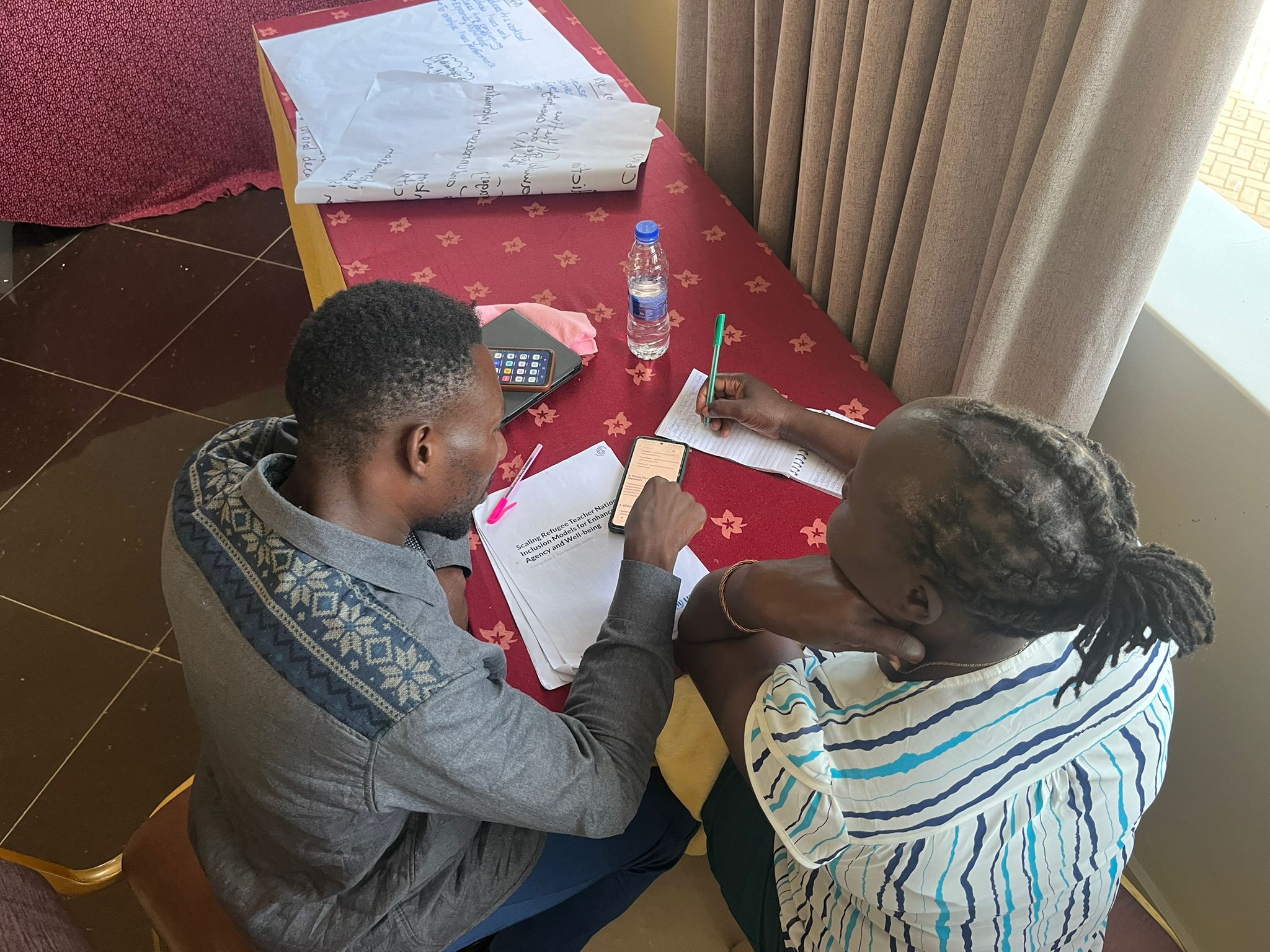
Jean Bosco collaborates with fellow peer researchers during a research training week.
I was also encouraged by the enthusiasm of the respondents. Many of them willingly came to participate in the research. They were interested in understanding the purpose of the research and how it could benefit them. This made the process very meaningful and enjoyable for me.
However, I also faced some challenges, which are common in this kind of activity. For example, some participants were absent at the last minute, some were not present in the settlement during the festive season, and sometimes the distances were very long.
Some questions were easier for respondents to answer, especially those related to refugee teachers’ wellbeing. These questions are very important and emotional because they touch on the general life conditions of refugee teachers. Other questions, particularly those related to agency, were more difficult for some respondents to answer.
Finally, I learned that this type of research should continue to be conducted regularly. It is important for understanding whether there is progress in the education sector for refugee teachers in different settlements.
This Think Piece is part of a series, featuring 18 refugee teachers from Chad, Uganda and Zambia. You can read the full publication here.
The contributors are peer researchers on a GERE study exploring refugee teacher inclusion, agency, and wellbeing. Read more about the study here.
“At first, the work felt challenging because I was not used to interviewing people in a formal way. However, it was also exciting because I was able to listen to teachers’ real experiences and learn from them.”
My name is Ajak William Bul Bior. I am a primary school teacher in Kiryandongo Refugee Settlement in Uganda. I have been teaching for three years. In my school, classrooms are often crowded and learning materials are limited. Even with these challenges, teaching is important to me because it gives children hope and knowledge for their future.
Recently, I had the opportunity to take part in a research project called “Scaling Refugee Teacher National Inclusion Models for Enhanced Wellbeing and Agency,” led by Jigsaw in partnership with Refugee Education UK and UNHCR. In this project, I helped to collect interview data from teachers. This gave me a new role, not only as a teacher but also as a peer researcher.
At first, the work felt challenging because I was not used to interviewing people in a formal way. However, it was also exciting because I was able to listen to teachers’ real experiences and learn from them. During the interviews, I spoke with both refugee teachers and national teachers. One moment I remember clearly was when a refugee teacher explained how difficult it is to have teaching certificates recognised in Uganda. Even though he had teaching experience in his home country, he could not easily get opportunities in Ugandan schools. This showed me that many refugee teachers have strong skills but face challenges they cannot control.
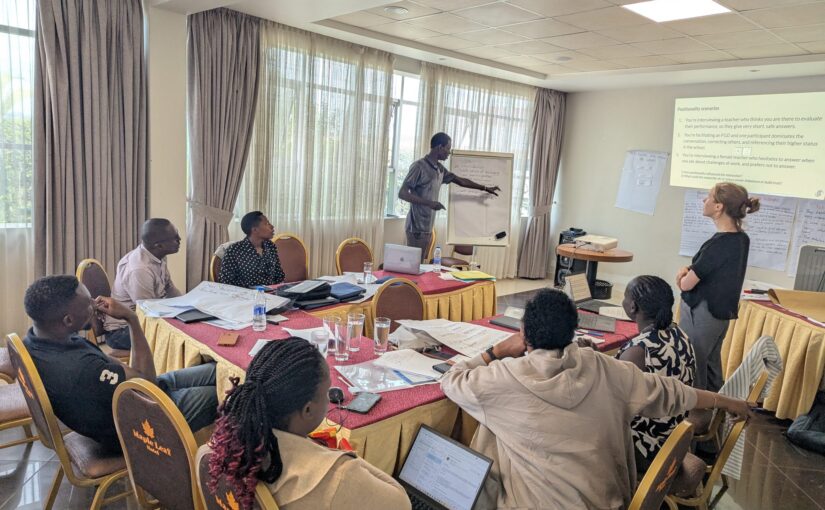
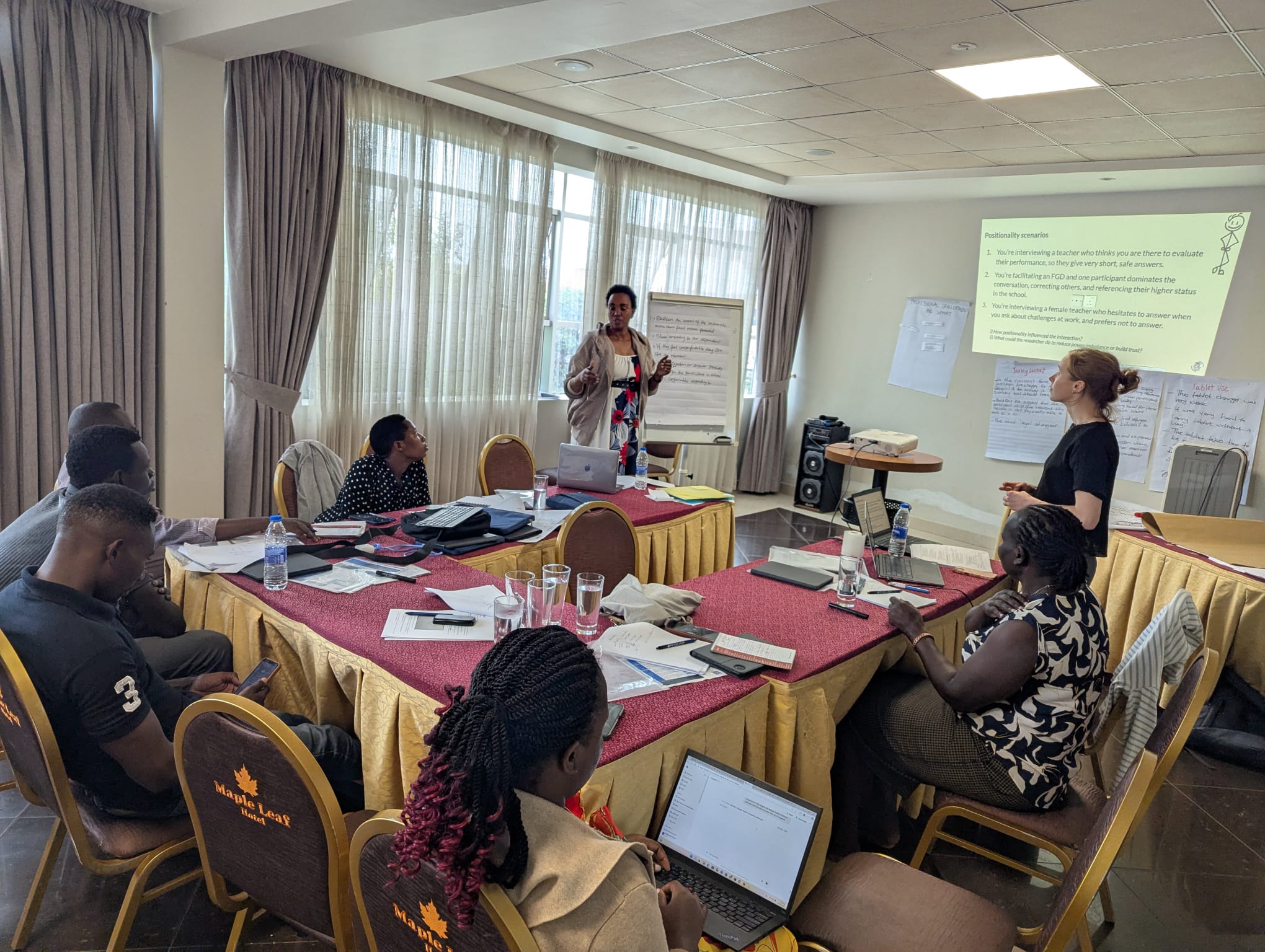
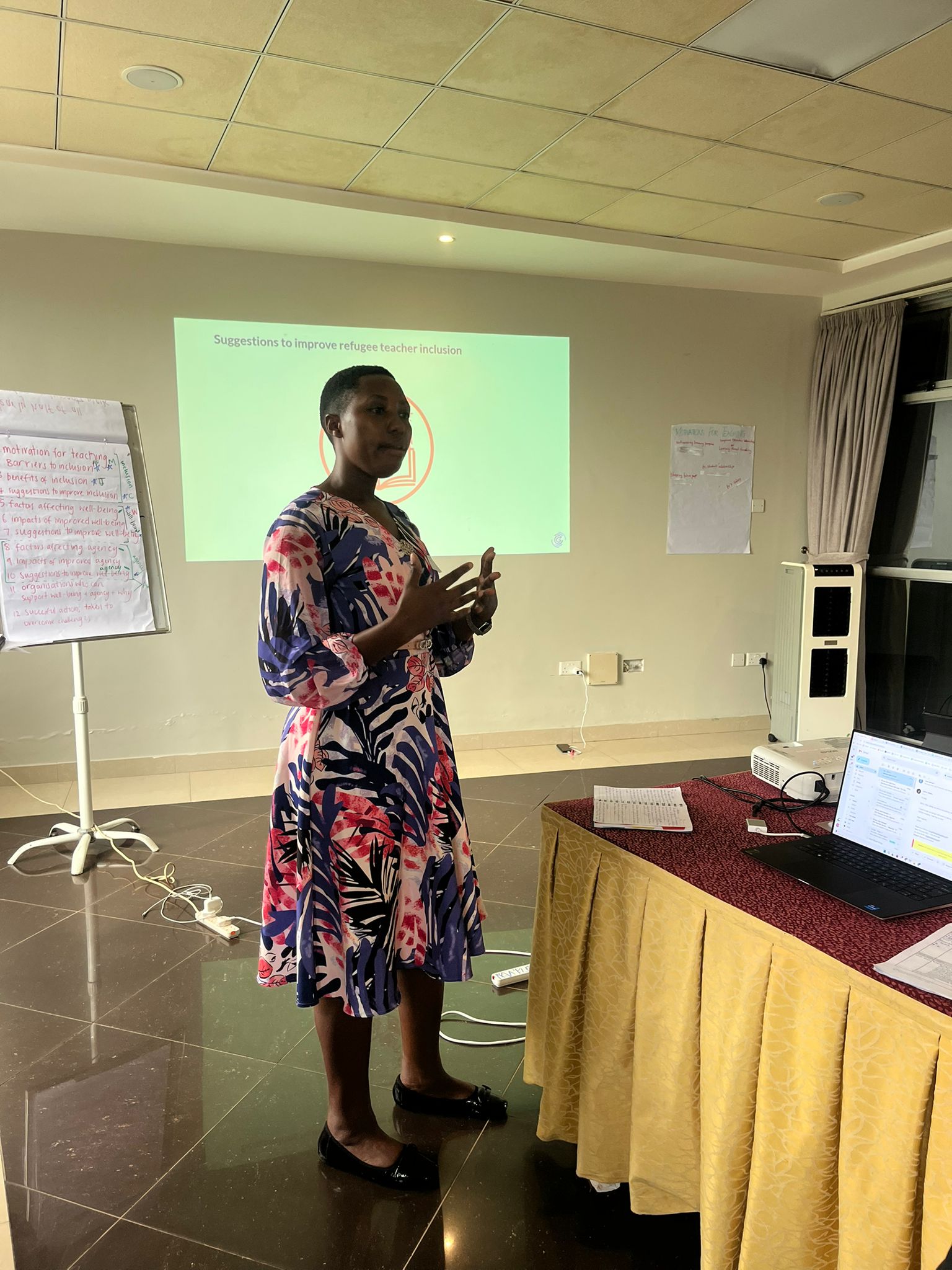
William presents to his fellow peer researchers and Jigsaw colleagues during a research training week.
I also noticed differences in how people shared their experiences. Refugee teachers often spoke openly about problems such as short contracts, low pay, and overcrowded classrooms. Some national teachers were supportive and believed refugee teachers should have equal opportunities, but sometimes they did not fully understand the difficulties refugees face.
One challenge during the research was asking questions about stress and discrimination. These topics were sensitive, and some participants became emotional. Because of this, I had to listen carefully and speak respectfully.
Overall, this experience helped me understand more about the real situations that refugee teachers face in their work. It also showed me how important it is to listen to teachers and learn from their experiences. Being a peer researcher helped me grow in confidence and responsibility, and it allowed me to see education in a different way.
I hope the findings from this research will help improve programming and support for refugee teachers so that their skills and experience can be recognised. When refugee teachers are supported and included, they can contribute more to education and help create better opportunities for learners in refugee communities.
This Think Piece is part of a series, featuring 18 refugee teachers from Chad, Uganda and Zambia. You can read the full publication here.
The contributors are peer researchers on a GERE study exploring refugee teacher inclusion, agency, and wellbeing. Read more about the study here.
“[The] experience showed me how important it is to involve people who understand the community when conducting research. Using peer researchers helps build trust and allows participants to share their experiences more openly.”
My name is Margaret Atto. I am a refugee currently living in Uganda and a teacher by profession. I have taught for over 10 years. Currently I am volunteering, teaching both lower and advanced secondary level. I am also a peer researcher with Jigsaw and recently I had the opportunity to engage with and collect data from fellow refugee teachers about their experiences, challenges and opportunities in accessing teaching in the national education system.
As a refugee teacher and peer researcher, collecting data from fellow refugee teachers was both a practical and meaningful experience. Many participants felt comfortable sharing their stories with me because they knew that I was also a refugee and understood their situation. This created trust and openness during the discussions. Some participants confidently shared their personal journeys, the barriers they face in accessing teaching opportunities, and their efforts to continue contributing to education despite these challenges.
One important realisation during the research process was that refugee teachers often feel more comfortable discussing their experiences with fellow refugees who understand their context. Because of this shared background, they considered me more like a colleague than an outsider. This made it easier for them to openly share their experiences and provide rich and detailed information based on their practical teaching experiences. What I enjoyed most about collecting data was the opportunity to build trust with the refugee teachers. Through these conversations, I was able to collect meaningful and authentic information about how they cope with professional and social challenges. I also witnessed their strong passion for teaching and their determination to continue supporting learners, even in difficult circumstances.
Margaret collaborates with a fellow peer researcher during a research training week.
One particular thing that stood out for me was when a colleague shared how he offered to work as a translator in a primary school where most learners came from an Arabic – speaking background, while some of the national teachers didn’t understand the learners’ language. Because he understood the language, he helped translate the teacher’s explanations so that learners could better understand the concepts being taught. This showed how much refugee teachers can play an important role in bridging language cultural gaps in classrooms.
However, the data collection process also had its challenges. One of the main challenges was organising participants for Focus Group Discussions because the teachers lived in different villages within the settlement, which made it difficult to bring them together to attend the organised meeting. In some cases participants withdrew at the last minute due other commitments, making it difficult to get replacement or reschedule meetings. Despite these challenges, experience showed me how important it is to involve people who understand the community when conducting research. Using peer researchers helps build trust and allows participants to share their experiences more openly.
Above all, what stood out most was the resilience of refugee teachers. Despite facing many difficulties, including limited employment opportunities and lack of stable income, many of them continue teaching without pay because they believe in the importance of education and hope that their situation will improve in the future. One key lesson I learned from this experience is that the voices of refugee teachers need to be heard. Their challenges and contributions should be recognised and addressed with urgency. Research should not only focus on collecting information but also on understanding people’s experiences, building trust and using the findings to support meaningful change.
Participating in this research has enriched my experience in participatory research and strengthened my understanding of its role in promoting inclusion of refugee teachers in the national education system.
This Think Piece is part of a series, featuring 18 refugee teachers from Chad, Uganda and Zambia. You can read the full publication here.
The contributors are peer researchers on a GERE study exploring refugee teacher inclusion, agency, and wellbeing. Read more about the study here.
“This research opened my eyes and transformed me—I am not the same person who started this journey.”
My name is Nduwimana Anitha. I am a 41-year-old refugee from Burundi, a mother of four, and currently living in Nakivale Refugee Settlement in Uganda, where I have spent the last ten years. I hold a Bachelor’s degree in Educational Sciences with a concentration in English (Licence en Sciences de l’Éducation, Département d’Anglais). After six years of unemployment, I began volunteering as a French teacher in a private secondary school within the settlement.
At the beginning, the journey was not easy. I often felt confused, speechless, and sometimes isolated. However, standing in front of my students slowly reminded me of a dream I had carried for many years: to serve others and contribute to education in a humanitarian context. Teaching young people in the settlement helped me rediscover my purpose.
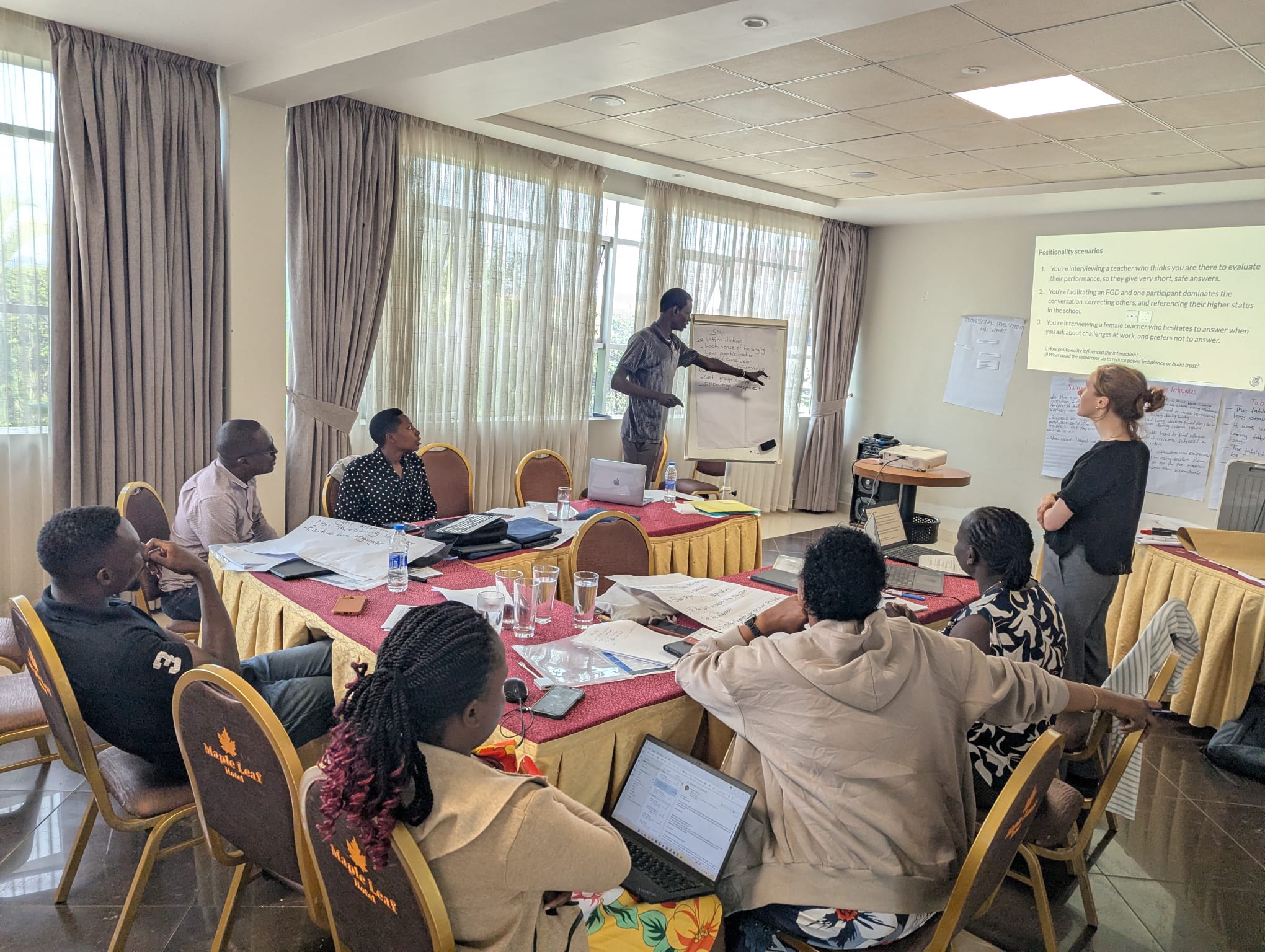
Anitha presents to her fellow peer researchers and colleagues during a research training week.
Through this project, I had the opportunity to conduct interviews and Focus Group Discussions with refugee teachers, national teachers, school directors, and other education authorities. Listening to their experiences opened my eyes. I realised that many refugee teachers are not aware of the pathways to access employment or the laws that affect their professional opportunities. I was also surprised to hear some teachers say that after many years of unemployment or very low salaries, they had started to accept their difficult situation as their destiny.
Being involved in this research was a transformative experience. It allowed me to interact with school leaders and strengthened my skills in research and teaching methodology. It also encouraged me to be more creative and innovative in my classroom.
Most importantly, this journey changed me. It gave me confidence not only in my professional life but also in my role as a woman and a mother. Today, I feel empowered and proud of the work I am doing with my learners. This research opened my eyes and transformed me—I am not the same person who started this journey.
This Think Piece is part of a series, featuring 18 refugee teachers from Chad, Uganda and Zambia. You can read the full publication here.
The contributors are peer researchers on a GERE study exploring refugee teacher inclusion, agency, and wellbeing. Read more about the study here.
“Listening to a refugee teacher describe how recognition would restore dignity sparked excitement in me to highlight their truths. It made me feel that our experience can inspire change.”
My name is AKITERETSE CLODINA, a refugee teacher living in Nakivale settlement, Uganda. I teach at a primary school and have 8 years of experience. My school is a lively place where children love to learn and we’re passionate about making a difference despite challenges like limited resources.
Clodina presents to her fellow peer researchers during a research training week.
Collecting interview and focus group discussion data was an exciting journey. Wearing the hat of a researcher alongside my identity as a refugee teacher made me eager to hear and highlight our stories. One moment that stands out is when a fellow refugee teacher said “Being heard gives me hope”. This sentence made me realise how important it is to give voice to our experiences. The interviews were different from what I expected because they were inspiring and participants spoke openly about their struggles, which surprised me and showed me the power of honest conversations that flow naturally. I noticed that refugee teachers shared experiences that showed their resilience and strength. And refugee teachers shared more personal experiences than national teachers, showing their unique challenges.
The part I enjoyed most about data collection was hearing stories that energised me. Listening to a refugee teacher describe how recognition would restore dignity sparked excitement in me to highlight their truths. It made me feel that our experience can inspire change. For instance, one participant said being part of research made them feel valued for the first time in years. Moments like these reminded me of the importance of highlighting refugee voices.
This research taught me that listening with empathy unlocks valuable insights. Refugee teachers need recognition and support to thrive. Highlighting our stories can build a more inclusive education community. By giving voice to our experiences, we can challenge stereotypes and create opportunities for collaboration and growth.
Ultimately, it’s about creating spaces where refugee teachers are heard, valued and empowered to contribute to the education systems that work for everyone.
This Think Piece is part of a series, featuring 18 refugee teachers from Chad, Uganda and Zambia. You can read the full publication here.
The contributors are peer researchers on a GERE study exploring refugee teacher inclusion, agency, and wellbeing. Read more about the study here.
“If there is one thing I want readers to take away, it is this: teachers, whether refugee or national, are the foundation of the future. But you cannot build a future on a foundation that is ignored, underpaid, and kept in the dark. We need transparency. We need information. We need to be valued.”
My name is Abraham Bashombana Aganze and I am a refugee teacher living and working in Uganda, in Nakivale refugee settlement. I have been teaching for five years now in my host country.
When I was asked to be a peer researcher for this project on refugee teacher inclusion pathways, I felt a mix of excitement and nervousness. I didn’t know what I would find by asking my colleagues to open up about their lives.
Honestly, what I found shocked me. It also changed how I see myself, my community, and the system we all navigate as teachers.
Abraham presents to fellow Peer Researchers and other colleagues in Uganda during a research training week.
Right from the start, collecting data was not easy. The research took place during the holidays, and I quickly learned that for many teachers, a “holiday” does not mean resting. Most teachers had left the settlement to look for other jobs of any kind just to survive because many are not paid during holidays. The people I needed to speak with were scattered, working hard in distant places just to put food on the table.
Then, when it was time to organise the Focus Group Discussions, another challenge appeared. Teachers live in different villages, spread far apart. Bringing everyone together in one place required money (money for transport refunds so they could afford to come and share their stories). I had to invest my own resources to make it happen. It was a logistical puzzle, and there were moments I worried we wouldn’t be able to do it at all.
Despite the difficulties, when we finally sat down to talk, the conversations were worth every effort. The biggest eye-opener was this: most refugee teachers have no idea what their rights are. I listened to colleague after colleague describe their struggles, and I realised that nobody had ever told them what they are entitled to. I kept asking myself: Why do stakeholders keep us ignorant? It feels like being left in the dark on purpose. We don’t know where to go for help, who to ask for support, or how to access the services that could fully include us in this country.
Before this research, I carried a heavy feeling that I was the only one who was not satisfied with my life. I thought my frustration was personal, something wrong with me. But sitting across from other refugee teachers, hearing their stories, I realised we are all struggling with the same dissatisfaction. Even more surprising? Some national teachers shared those same feelings. That moment revealed a hard truth: it isn’t just abongaged constructively with questions and suggestions from government representatives, responding with clarity and confidence.
I also learned about the obstacles that keep us stuck. Many refugee teachers told me about trying to get their documents equated, only to wait years for a result. The process is so long, it makes you wonder if corruption is pulling the strings behind the scenes. How else do you explain a system that moves so slowly that it keeps people from working legally in their profession?
Abraham receives a certificate of completion following the end of a research training week.
Even with all these challenges, this experience gave me something invaluable. The training we received as peer researchers has truly empowered me. I gained knowledge and skills that will remain relevant for the rest of my life; not just as a researcher, but as a teacher. I learned how to listen more deeply, how to ask questions that matter, how to solve problems that affected both my students and myself using the research methodologies and skills I learned and and how to see the bigger picture behind individual struggles. That training is a gift I will carry with me forever.
And the benefits keep growing. The gadget I was given to conduct this research, to record interviews and take notes, is now helping me in my classroom every day. I use it to find and prepare materials for my lessons. The skills I learned during the training have also improved my teaching practices. I find myself engaging with my students differently, asking better questions, and really listening to their answers. What started as a research project has made me a better teacher.
I always use the tablet to access French and Kiswahili courses on different online platforms (Alison, YouTube,..). I started using this teaching strategy after realising that many pupils in my secondary school don’t like the above mentioned languages. I had to use the research knowledge and skills I learned during Jigsaw trainings to find out the reasons behind their unjustified abhorrence. After conducting interviews with my learners, I realised that the content in the syllabus book is what scares them since they do lack basic knowledge. This made me look for French and Kiswahili lessons for complete beginners. Now my class is full of pupils who have taken French as an optional subject.
This research has reached deep into my awareness and brought things to light that I never saw before. I thought I was alone in my frustration, but I am part of a crowd. The challenge now is figuring out how we make our voices heard; and how we finally get the information and rights we deserve.
If there is one thing I want readers to take away, it is this: teachers, whether refugee or national, are the foundation of the future. But you cannot build a future on a foundation that is ignored, underpaid, and kept in the dark. We need transparency. We need information. We need to be valued.
This Think Piece is part of a series, featuring 18 refugee teachers from Chad, Uganda and Zambia. You can read the full publication here.
The contributors are peer researchers on a GERE study exploring refugee teacher inclusion, agency, and wellbeing. Read more about the study here.
This video was prepared for a roundtable debate at the Global Refugee Forum 2025. The participatory roundtable aimed to amplify the lived realities of refugee teachers, elevate their policy-relevant perspectives, take stock of progress and learning, whilst reinforcing the urgent need for sustainable and equitable financing for education and teachers in crisis settings. Our GERE-Research contribution included hearing from our refugee teacher researchers in Chad, Uganda and Zambia, as well as some emerging findings from our research.
The Scaling Refugee Teacher National Inclusion Models for Enhanced Agency and Well-being project is a 33-month research study as part of the GERE research initiative – a partnership between Jigsaw, Refugee Education UK and UNHCR. Running from 2024–2027 in Chad, Uganda, and Zambia, the project explores how refugee teachers can be more effectively included in national education systems in ways that strengthen both their agency and their wellbeing.
Across the three countries, 18 refugee teachers have been recruited as peer researchers. They play a central role in shaping research tools, conducting fieldwork, and bringing critical contextual insights to the study. Through an accredited training programme, they are being equipped not only as researchers but also as reflective, evidence-based practitioners.
The Scaling Refugee Teacher National Inclusion Models for Enhanced Agency and Well-being project is a 33-month research study as part of the GERE research initiative – a partnership between Jigsaw, Refugee Education UK and UNHCR. Running from 2024–2027 in Chad, Uganda, and Zambia, the project explores how refugee teachers can be more effectively included in national education systems in ways that strengthen both their agency and their wellbeing.
Across the three countries, 18 refugee teachers have been recruited as peer researchers. They play a central role in shaping research tools, conducting fieldwork, and bringing critical contextual insights to the study. Through an accredited training programme, they are being equipped not only as researchers but also as reflective, evidence-based practitioners.
The first round of training and data collection is complete in each country. Peer researchers took part in a week-long programme covering core research methods, and then each peer researcher administered 30 teacher surveys in their communities, contributing over 540 responses across the cohort.
At UKFIET 2025, we shared a short video in which peer researchers introduced themselves and reflected on the first phase of the project. They speak about their experiences of teaching in their host countries, and their first steps as researchers in this project. Their contributions were warmly received, and the video was especially appreciated for bringing refugee teacher voices directly into the conference space.
The voices of our peer researchers highlight the potential of refugee teacher researchers to shape more inclusive and equitable education systems.